Decision 01
Build the system before the screens
- Problem
- Parallel products need a common base.
- Evidence
- Starting from zero.
- Decision
- Define brand and UI rules first.
- Trade-off
- Slower first screens.
- Validation
- Review consistency across apps.

Joined as the design owner for the company’s brand and product experience, building brand identity, UI system, and UX from zero through launch.
Designed layouts, visual assets, and animation for digital learning content.
Challenge: Building brand and product experience from zero
Solution: A single identity and UI system carried through wireframes, prototypes, and launch across apps.
0→1 brand and product design for a digital-learning company.
At a glance
My role
Brand identity from scratch: visual language, guidelines, and assets
Timeline
Oct 2010 to Aug 2012
Education technology
Key decision
Define brand and UI rules first.
Evidence on this page
1 built, 0 provisional, 0 illustrative, 0 planned
Each outcome below is labeled.
// The problem
How to read this page: the outcomes marked Built are results I can stand behind. Personas, decisions and the problem framing are my design reasoning for this product and are not interview findings. Measured numbers are added only where I hold them.
At iBerry I was the design owner for the brand and product experience. Starting from zero, I built the brand identity, the UI system and the UX across several digital learning applications through launch.
The company needed a visual identity that worked across products.
Multiple learning products ran in parallel.
Layouts, visuals and animation had to support understanding.
// Strategy
KPIs are what the product is built to move. They are targets until a measured result is shown.
One identity and UI system carried across every learning application.
| Business problem | Product capability | KPI | Intended outcome |
|---|---|---|---|
| No identity | Brand visual language and guidelines | Consistency across products | Recognisable brand |
| Parallel products | Shared UI system | Reuse | Faster delivery |
| Content clarity | Layouts and animation for learning | Learner comprehension | Engaging content |
// Users
Provisional personas, derived from the workflow and the roles involved. They are not interview findings.
Understand and enjoy the content
Approve and use the product
Build from design
// Capabilities
A capability map of what the product is designed to do. It describes design scope, not a feature audit.
Visual language, guidelines and assets.
Shared components across applications.
Screens designed to support understanding.
Purposeful motion in learning content.
One identity across several platforms.
Clickable concepts for client approval.
Visuals and specs ready for development.
Technical guidance for other designers.
// Scenarios
The team starts from the shared system and has a branded prototype in days.
Concepts are presented side by side and the client approves one direction.
Final assets and guidance go to development with one consistent look.
// Process
Stage 01 of 5
Visual language, guidelines and assets built from scratch.
// Design decisions
Each decision is written the same way so the reasoning can be checked.
Decision 01
Decision 02
Decision 03
// Outcomes
Brand identity, UI system and UX delivered across multiple digital learning applications.
// Leadership
// What I did
// What is next
// What I learned
Zero to one work rewards a small, strong system. One set of rules carried across every product saved more time than any single design.

UX and design system for Skywalk Consultant's AI recruitment platform. n8n workflows screen and route candidates, and a command center lets recruiters see, check and override every AI decision.
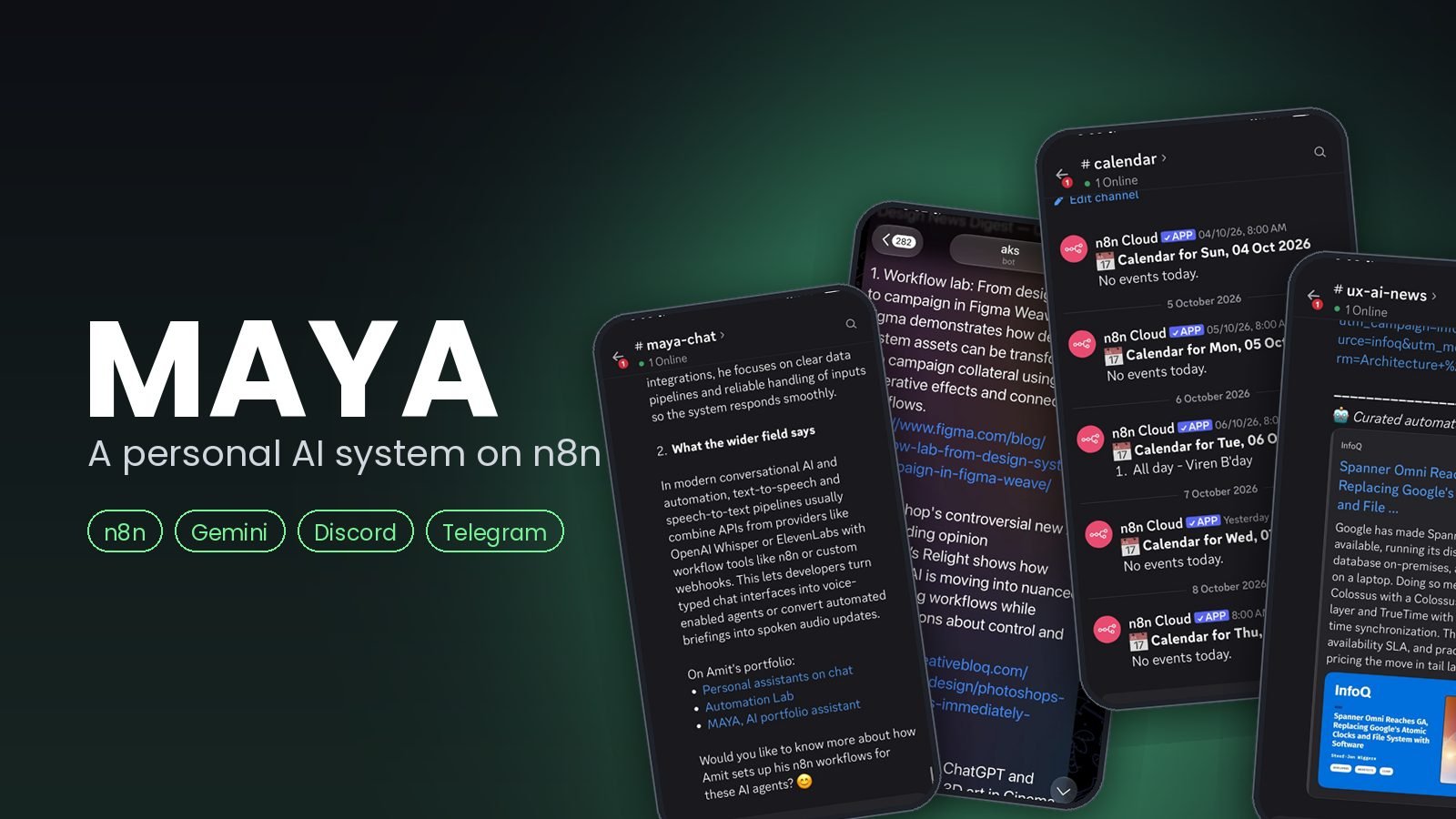
Seven n8n builds on one hub: a portfolio chat assistant, an interview-prep web app, a daily design digest, inbox triage, a morning briefing, two chat agents and a Claude to Gemini image pipeline. Results land in Discord, Telegram and Gmail, and most of them run every day.
I'm open to design leadership roles. Send me a note and I'll reply within two working days.