Skip to content
Amit Kumar, Senior Design Manager, UX & Product Design

// Home/// Work/// Wellness

Wellness

Wellness offering introduced as a new product line, expanding the company’s employee-experience portfolio.

Live Preview
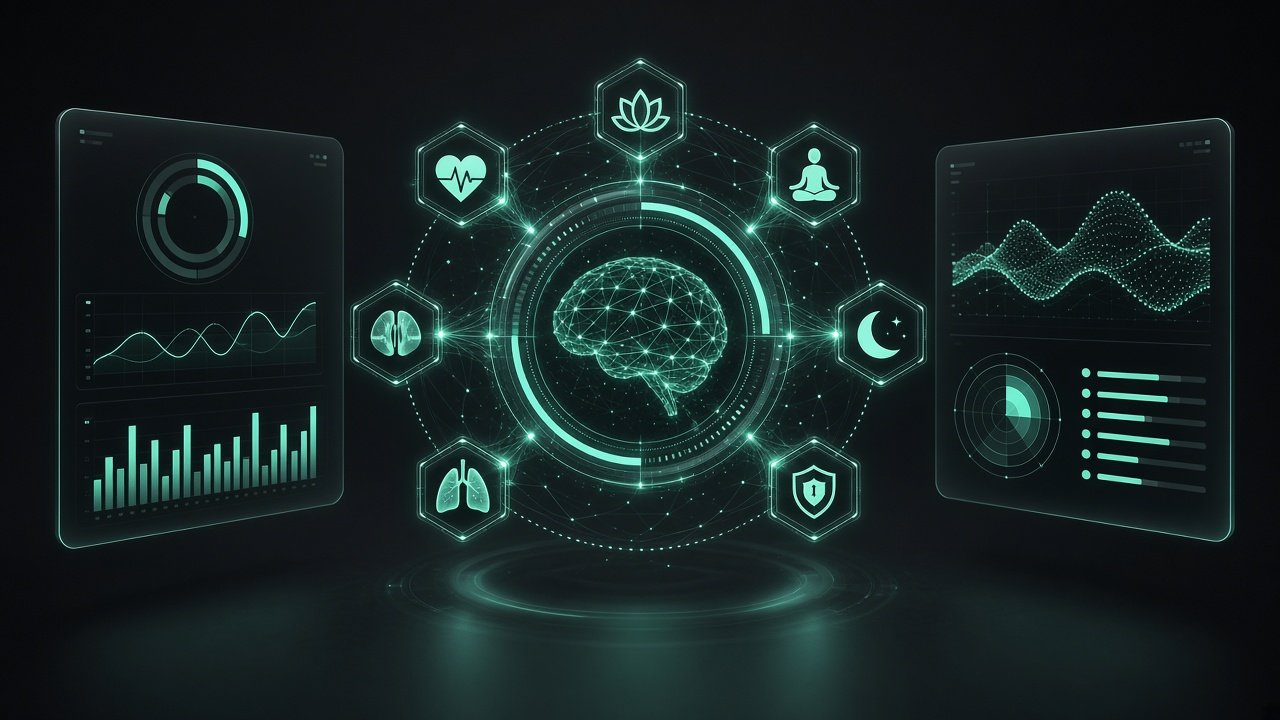
Wellness cover
Industry
Employee wellness
Timeline
Dec 2022 to Present
Technologies
Figma, Product discovery, Usability testing, AI-assisted analysis, Perplexity, Google Stitch, Claude Design, Figma AI

Project Overview

Expanded the company’s product portfolio by introducing Wellness, contributing to business growth, increased product adoption, and revenue generation.

Drove product discovery and roadmap planning by translating business objectives into user-centered design strategy.

My role

  • Design direction for a new product line
  • Research, prototyping, and usability testing
  • Cross-functional collaboration with product and engineering

Key Features

  • Wellness experience for enterprise employees
  • Design QA through release

Challenges & Solutions

Challenge: Launching a new offering inside an existing product suite
Solution: Portfolio-level UX strategy so Wellness felt native to the existing suite while serving a distinct user need.

Takeaways

A new product line that contributed to adoption and revenue generation.

At a glance

My role

Design direction for a new product line

Timeline

Dec 2022 to Present

Employee wellness

Key decision

One quick action to begin, depth later.

Evidence on this page

2 built, 0 provisional, 0 illustrative, 0 planned

Each outcome below is labeled.

// The problem

What was getting in people's way

How to read this page: the outcomes marked Built are results I can stand behind. Personas, decisions and the problem framing are my design reasoning for this product and are not interview findings. Measured numbers are added only where I hold them.

Wellness was introduced as a new product line inside an existing employee experience suite. It had to serve a distinct need while feeling native to the platform employees already use.

A new need inside an old suite

Employees come to the platform for other reasons, so wellness has to earn attention.

Engagement that fades

Wellness programmes often start strong and lose participants.

Employer visibility without intrusion

Companies want participation insight, but employees need privacy.

// Strategy

From business problem to measurable outcome

KPIs are what the product is built to move. They are targets until a measured result is shown.

A wellness experience that is easy to start, easy to keep up and respectful of personal data.

Business problemProduct capabilityKPIIntended outcome
Low early engagementSimple first action and visible progressActivation rateMore employees start
Drop off after the first weeksGentle reminders and varietyReturn rateSustained participation
Privacy concernsAggregate employer view onlyOpt in rateTrust in the product
No wellness offering in the suitetoA wellness product line
Separate tools for wellness benefitstoOne platform employees already use
Programme owners guess participationtoParticipation visible in aggregate

// Users

Who the product is for

Provisional personas, derived from the workflow and the roles involved. They are not interview findings.

Employee

Look after their health without friction

  • Quick start
  • Clear goals
  • Private by default

HR or wellness lead

Run a programme that people join

  • Participation overview
  • Campaigns
  • Aggregate reports

Company admin

Offer wellness as a benefit

  • Easy setup
  • Budget clarity

// Capabilities

What the app can do

A capability map of what the product is designed to do. It describes design scope, not a feature audit.

Quick start

One simple first action to begin.

Goals and progress

Personal goals with visible progress.

Challenges

Team or company wellness challenges.

Content and tips

Guidance across movement, sleep and mind.

Reminders

Gentle nudges that respect time and settings.

Programmes for HR

Create and run campaigns for employees.

Aggregate insights

Group level participation without exposing individuals.

Privacy controls

Personal data stays under the employee's control.

// Scenarios

An employee starts small

They log one activity in under a minute and see a first streak.

HR launches a challenge

A company wide step challenge starts in a few clicks and participation shows in aggregate.

Keeping the habit

A reminder arrives at a time the employee chose, and a short tip keeps it fresh.

// Process

How I ran discovery to release

Stage 01 of 5

Discover

Product discovery with business and product teams on where wellness fits.

// Design decisions

Problem, evidence, decision, trade-off, validation

Each decision is written the same way so the reasoning can be checked.

Decision 01

Make the first action tiny

Problem
A long setup kills motivation.
Evidence
Common pattern in habit products.
Decision
One quick action to begin, depth later.
Trade-off
Less data captured up front.
Validation
Track activation after launch.

Decision 02

Aggregate views for employers

Problem
Health data is personal.
Evidence
Privacy first design principle.
Decision
Employers see group level trends only.
Trade-off
Less granular targeting.
Validation
Review the design with HR and legal stakeholders.

Decision 03

Native to the suite

Problem
Employees should not learn a new interface.
Evidence
Suite wide UX strategy.
Decision
Shared components with wellness specific content.
Trade-off
Some wellness ideas had to fit existing patterns.
Validation
Design QA against the shared system.

// Evidence from the company site

What Advantage Club says publicly

Source: advantageclub.in, checked 8 Oct 2026. Company claims, paraphrased. Not my measured results.

What Advantage Club says publicly about its wellness offer. These are the company's claims, not results I measured.

  • The wellness page lists OPD cover, health check-ups, fitness and financial wellness as parts of one employee offer.

    Source ↗
  • Company-wide, Advantage Club states it serves 10,000+ brands across 100+ countries.

    Source ↗

// AI in the process

How AI shapes the design process

This describes the method my team uses. It is not a measured result.

AI at Advantage Club is part of how my team decides what to design next. We use it to read the data, turn it into a usability and engagement report, and write clear design instructions. Designers then use generative tools to produce reference pages and refine them by hand in Figma.

For Wellness the report looks at how employees engage over time: which programs are joined, which are dropped after the first week, and which entry points get used.

  1. Step 1 · AI analysis

    Analyze the data

    Usage and engagement exports are analyzed to find drop-offs, unused features and unusual patterns.

  2. Step 2 · Perplexity

    Check and research

    Data sanity checks and secondary research. Numbers and claims are verified before they go into a report.

  3. Step 3 · AI-assisted

    Write the report

    A usability and engagement report that names the problem screens, the affected users and the likely cause.

  4. Step 4 · Design brief

    Turn it into design instructions

    Each finding becomes a specific instruction for the new or revised page: what to change, for whom, and what to measure.

  5. Step 5 · Google Stitch, Claude Design, Figma AI

    Generate references

    The instructions are fed to generative design tools to produce several reference layouts quickly.

  6. Step 6 · Figma

    Design and review

    Designers choose, rebuild and refine in Figma with the design system, then run usability review before release.

Tools

  • Perplexity · Data sanity checks and research
  • Google Stitch · Quick UI reference screens from written instructions
  • Claude Design · Reference layouts and design exploration
  • Figma AI · Variations and cleanup inside the design files
  • Figma · Final design, design system and handoff

Guardrails

  • AI output is a reference. A designer makes every final decision.
  • Data is checked before it drives a design instruction.
  • Generated screens are rebuilt with the design system, never shipped as they come.
  • Results are stated only when they are measured.

// Outcomes

What exists, and how sure I am

Built

New product line

Wellness was introduced as a new offering, expanding the employee experience portfolio.

Built

Business growth

Contributed to business growth, product adoption and revenue generation.

// Leadership

My contribution, what is next, what I learned

// What I did

  • Design direction for a new product line
  • Research, prototyping and usability testing
  • Cross functional work with product and engineering

// What is next

  • Participation and return rate tracking
  • Personalised programmes
  • Integration with wearable data, subject to privacy review

// What I learned

A new line inside an existing suite succeeds when it borrows what people already know and spends its novelty on the one thing that is new.

Hiring a design leader for an AI product?

I'm open to design leadership roles. Send me a note and I'll reply within two working days.